


As a supplier of printed films, I often receive various inquiries from customers, and one question that comes up quite frequently is about the chemical resistance of printed films. In this article, I'll delve into the details of chemical resistance of printed film, share its importance, influencing factors, testing methods, and much more.
Understanding Chemical Resistance
Let's first define what chemical resistance means in the context of printed films. Chemical resistance refers to the ability of a printed film to withstand the action of chemicals without significant deterioration or loss of its physical and chemical properties. This includes resistance to solvents, acids, alkalis, oils, and other substances that the film may come into contact with during its service life.
For many applications, such as food packaging, industrial packaging, and labeling, chemical resistance is a crucial property. In the food industry, for example, printed films need to resist various food components, including fats, oils, and acidic or alkaline substances. A film with poor chemical resistance may dissolve, delaminate, or leach harmful substances into the food, which can pose a serious risk to consumers.
In industrial applications, printed films may be exposed to harsh chemicals such as cleaning agents, fuels, and lubricants. A film that can resist these chemicals is essential to maintain its integrity, appearance, and functionality over time.
Factors Affecting Chemical Resistance
Several factors influence the chemical resistance of printed films.
Polymer Type
The type of polymer used in the film is the most fundamental factor. Different polymers have different chemical structures and, therefore, different levels of chemical resistance. For instance, polyethylene (PE) is generally resistant to many non - polar solvents and mild acids and alkalis. It has a simple hydrocarbon structure that makes it relatively stable in many chemical environments.

On the other hand, polyvinyl chloride (PVC) has varying degrees of chemical resistance depending on its formulation. Unplasticized PVC (uPVC) is more resistant to chemicals than plasticized PVC, as the plasticizers can sometimes leach out when exposed to certain chemicals, leading to loss of mechanical properties and chemical resistance.
Additives
Additives are often incorporated into printed films to enhance their performance, such as antioxidants, UV stabilizers, and slip agents. However, some additives can reduce the chemical resistance of the film. For example, certain types of plasticizers may be soluble in some organic solvents, causing the film to swell or lose its strength when in contact with these solvents.
Printing Inks
The printing inks used on the film can also affect its chemical resistance. Some inks may be more chemically stable than others. Solvent - based inks, for example, can be sensitive to solvents and may dissolve or bleed when exposed to certain chemicals. Water - based inks, on the other hand, are generally more resistant to solvents but may be less resistant to water - based chemicals, especially if they are not properly cured.
Chemical Resistance in Different Applications
Food Packaging
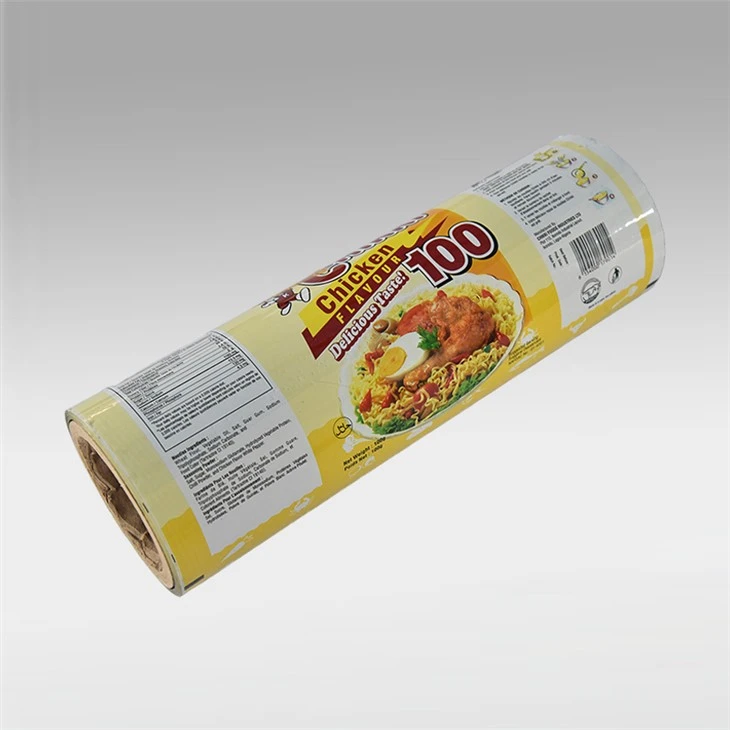
In the food packaging industry, Food Roll Film and Instant Noodle Roll Film require high - level chemical resistance. The film should not react with food components or transfer any harmful substances to the food. It needs to resist the action of fats, oils, which are common in many food products. For example, in instant noodle packaging, the film must resist the oily flavoring and the steam generated during cooking.
Industrial Packaging
Industrial products often require protection from chemicals during storage and transportation. Printed films for industrial packaging need to resist the chemicals associated with the product. For example, if the product is a cleaning agent, the film should be resistant to the acids or alkalis in the cleaner. Similarly, for products like lubricants and fuels, the film must be able to withstand the action of these oily substances.
Testing Chemical Resistance
To ensure the chemical resistance of printed films, various testing methods are employed.
Immersion Testing
This is one of the most common methods. A sample of the printed film is immersed in a specific chemical for a certain period of time under controlled conditions. The film is then taken out, and its physical properties, such as appearance, strength, and adhesion of the printing, are evaluated. If the film shows significant changes, such as swelling, cracking, or loss of color, it indicates poor chemical resistance.
Spot Testing
In spot testing, a small drop of the chemical is placed on the surface of the printed film. The film is observed for a certain period to see if there are any visible changes, such as discoloration or dissolution at the spot where the chemical was applied. This method is quick and can provide a preliminary assessment of the film's chemical resistance.
Exposure Testing
Exposure testing involves exposing the printed film to a chemical environment for an extended period. This can simulate real - world conditions more accurately. For example, in a laboratory, the film may be placed in a chamber with a controlled atmosphere containing a specific chemical vapor. The film's performance is monitored at regular intervals over a long - term exposure to evaluate its chemical resistance.
Importance of Choosing the Right Chemically Resistant Printed Film
Choosing the right chemically resistant printed film is essential for both product quality and safety. For businesses, using a film with inadequate chemical resistance can lead to product defects, customer complaints, and even legal issues. For example, if a food packaging film fails to resist the food components, resulting in food contamination, the company may face substantial losses due to product recalls and damage to its brand reputation.
On the other hand, selecting a high - quality chemically resistant printed film can enhance product performance and longevity. It can ensure that the product remains in good condition during storage, transportation, and use, providing better value for customers.
Conclusion and Invitation for Contact
In conclusion, the chemical resistance of printed films is a complex yet crucial aspect that affects their performance in various applications. As a printed film supplier, we understand the importance of providing high - quality, chemically resistant films to meet the diverse needs of our customers.
We have a wide range of printed films, including Food Roll Film and Instant Noodle Roll Film, with excellent chemical resistance properties. Our films are carefully formulated and tested to ensure they can withstand the specific chemical environments of different applications.
If you are in need of printed films with high - level chemical resistance, we would be delighted to discuss your requirements. Whether you are in the food industry, industrial sector, or any other field that requires reliable printed films, we can provide customized solutions to meet your exact needs. Contact us to start a procurement discussion and find the perfect printed film for your products.
References
- ASTM International. (20XX). Standard test methods for evaluating the chemical resistance of plastics.
- European Food Safety Authority. (20XX). Guidelines on migration testing of food contact materials.
- Polymer Handbook, 4th Edition. Wiley - Interscience.


