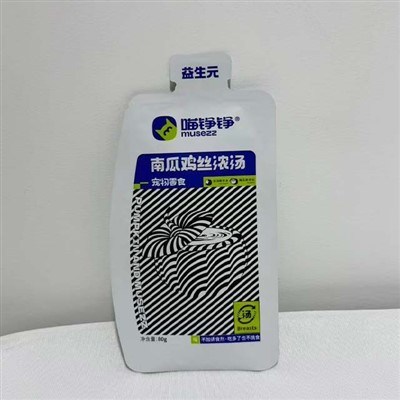
1. Impact during filling: During the automatic packaging process, the filled contents may have a strong impact on the bottom of the bag, causing the bottom to crack. If the bottom of the bag cannot withstand this impact, it may be damaged.
2. Insufficient heat sealing performance: On the production line, the production of flexible packaging bags is almost synchronized with the filling of the contents, and the heat-sealed part of the bottom of the bag may not be completely cooled, resulting in insufficient heat sealing strength. Hot adhesion should be used as the basis for evaluating the heat sealing performance of the material, and appropriate heat sealing parameters should be selected.
3. Pressure during storage and transportation: During product stacking and transportation, the increase in internal pressure caused by commodity stacking and other reasons may cause the bag to rupture.
4. Improper material selection: The heat sealing strength of the packaging material is closely related to bag breakage, but it is not completely correct. It is necessary to calculate the impact force on the bottom of the flexible packaging bag during filling according to the filled contents, and select the best combination of heat sealing parameters.
5. Environmental factors: If the temperature is too low, the packaging bag may become hard and brittle, resulting in poor resistance to freezing and puncture, causing the packaging bag to rupture.
Countermeasures include:
1. Optimize heat sealing parameters: Draw the heat adhesion curve by adjusting the heat sealing temperature, heat sealing pressure and heat sealing time, and select the best heat sealing parameter combination for the production line.
2. Select suitable packaging materials: Select suitable packaging materials according to product characteristics and packaging requirements to ensure that the heat sealing strength and heat adhesion of the materials meet production needs.
3. Improve packaging design: Design a more reasonable packaging structure to enhance the impact resistance and pressure resistance of packaging bags.
4. Strengthen quality control: Strengthen the inspection of packaging bag quality during the production process to ensure that each packaging bag meets the quality standards.
5. Consider environmental factors: For frozen packaging bags, select materials that can adapt to low temperature environments to prevent packaging bags from breaking due to temperature changes.
Through these measures, the breakage rate of packaging bags during production, storage and transportation can be effectively reduced.